.webp)
A white Hyundai i20, its ownership obscured by a series of informal sales spanning over a decade, became the epicentre of a devastating explosion near Delhi's iconic Red Fort on Monday evening. The blast, which claimed at least eight lives and injured more than 20 others, has thrust the unassuming hatchback into the spotlight of a high-stakes investigation, with authorities probing its murky past and potential role in a suspected terror plot.
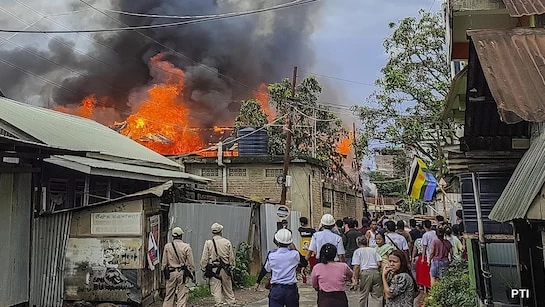
The incident unfolded around 6:50 p.m. on November 10, when the slow-moving i20 halted at a traffic signal on Subhash Marg, mere meters from Gate No. 1 of the Red Fort Metro Station in the bustling Chandni Chowk area. Eyewitnesses described a thunderous detonation that engulfed the vehicle in flames, igniting nearby cars and shattering windows up to 300 meters away. The force ripped through the densely populated Old Delhi neighbourhood, less than 500 meters from the Old Delhi Railway Junction, sending pedestrians fleeing and emergency responders racing to the scene. Seven fire tenders and over a dozen ambulances arrived within minutes, but the fire had already gutted several adjacent vehicles before being contained.
At the core of the probe is the i20 itself - a 2014 model bearing Haryana registration HR26CE7674. Purchased new by Md. Salman, a resident of Gurugram, the car has since changed hands at least four times without any formal transfer of registration, leaving its records frozen in Salman's name. Investigators, coordinating with regional transport offices and police in Haryana, Delhi, and Jammu & Kashmir, have pieced together a fragmented trail: Salman sold it informally about 18 months ago to Devendra, a local from southeast Delhi's Okhla area. Devendra then passed it to another buyer in Ambala, Haryana, before it landed with Nadeem, who offloaded it to a used car dealer at Royal Car Zone in Faridabad. The final link points to Tariq, a resident of Pulwama in Jammu & Kashmir, who acquired it recently - potentially using questionable documents, according to preliminary findings. He eventually gave the car to Dr. Umar Mohammad, a doctor from Pulwama working in Faridabad. Investigators believe Umar Mohammad was the primary suspect and was likely driving the car when the explosion occurred, possibly in a suicide attack after other members of his module were arrested. Tariq has been detained by police in Kashmir, so have the family members of Umar have been detained by J&K police for questioning.
The vehicle's history is marred by multiple traffic violations, including a challan for wrongful parking in Faridabad on September 20, all duly cleared, hinting at routine use in the Delhi-NCR corridor. Delhi Police's Special Cell, aided by over 100 CCTV feeds from city networks, toll plazas, and parking lots, has meticulously reconstructed the i20's movements on the day of the blast. The car crossed the Badarpur border from Faridabad into Delhi earlier in the afternoon, weaving through traffic at speeds reaching 120 km/h in some stretches. By 3:19 p.m., it pulled into a parking lot adjacent to Sunehri Masjid, near the Red Fort, where it idled for nearly three hours, the driver remaining inside without exiting. Footage from this period shows a solitary figure at the wheel, later identified as Dr. Umar Mohammad, a Pulwama native and the prime suspect. The vehicle departed the lot at 6:48 p.m., crawling toward the signal where it detonated four minutes later. No additional passengers were visible, supporting initial assessments that Umar was alone.
Forensic teams from the National Security Guard (NSG), National Investigation Agency (NIA), and Forensic Science Laboratory (FSL) swarmed the wreckage overnight, collecting samples amid charred remnants. While an official statement is still pending, multiple reports point to ammonium nitrate-based explosives, possibly ANFO (ammonium nitrate fuel oil), though no shrapnel like nails or ball bearings was recovered, suggesting a non-fragmenting device. The FIR, lodged at Kotwali police station, invokes the Unlawful Activities (Prevention) Act (UAPA) and Explosives Act, signalling strong suspicions of a deliberate attack - though officials emphasise all angles, including mechanical failure, remain open. Intelligence links the timing to a recent Faridabad bust of a terror module, where over 2,900 kg of ammonium nitrate was seized from sites tied to a Jammu & Kashmir doctor, Adil Rather. Potential involvement of Pakistan-based Jaish-e-Mohammad (JeM) is under scrutiny, with Umar's associates, including his two brothers in Pulwama, now detained alongside 12 seized mobile phones.
Raids intensified Tuesday in Faridabad and Jammu & Kashmir, yielding the arrest of Dr. Adeel, a colleague of Rather at Al Falah Medical College, and the questioning of Tariq Ahmed Dar. Salman and Devendra, early owners in the chain, were detained in Gurugram for interrogation. Home Minister Amit Shah, who visited the site and hospitals late Monday, to convene a high-level security review at 11 a.m. Tuesday, joined by top brass from the Intelligence Bureau, NIA, and Delhi Police.