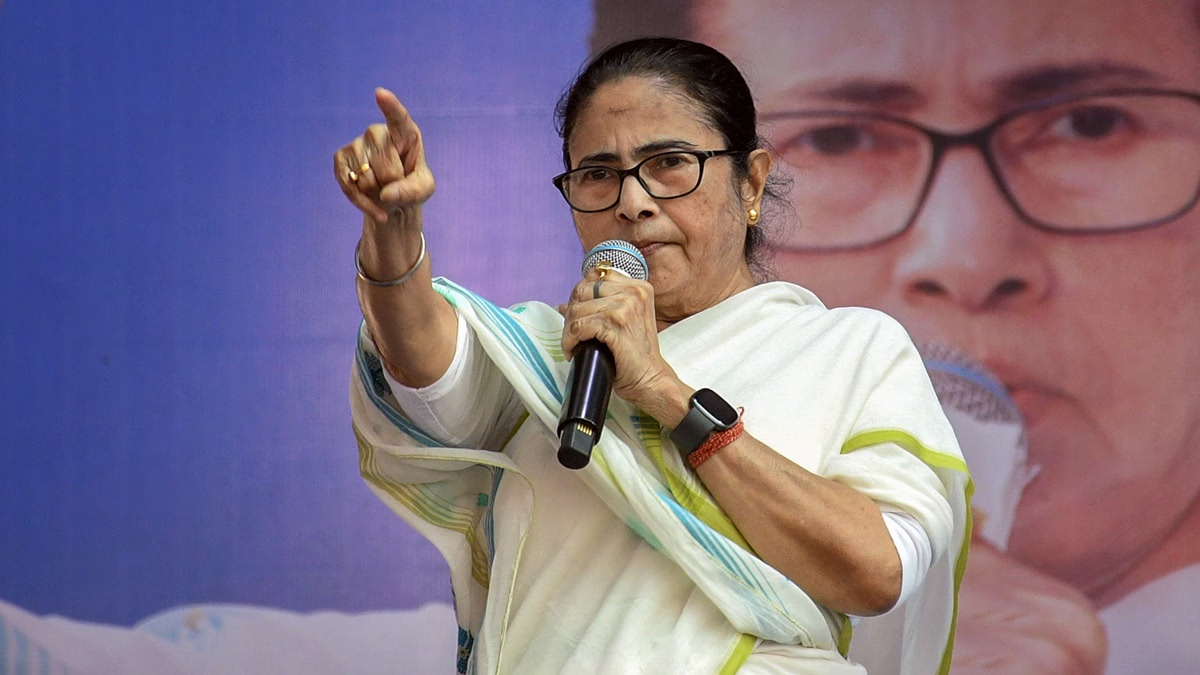
West Bengal Chief Minister Mamata Banerjee is set to stage a sit-in protest in Kolkata on Friday against the controversial Special Intensive Revision (SIR) of the voter list, escalating the Trinamool Congress’s agitation against what it alleges are large-scale deletions of genuine voters from electoral rolls.
The protest comes amid mounting political confrontation between the state government and the Election Commission over the revision exercise. The ruling party has claimed that thousands of legitimate voters in several constituencies, including parts of Kolkata, have either been deleted from the rolls or placed under adjudication during the SIR process. Banerjee had earlier warned that she would personally take to the streets if genuine voters were removed, accusing the Election Commission of acting under pressure from the BJP. She alleged that the revision exercise could disenfranchise a large number of people and vowed to resist any such attempt.
SIR Controversy
The Special Intensive Revision was initiated to update electoral rolls and remove ineligible names. However, opposition parties - particularly the Trinamool Congress - claim that the exercise has resulted in widespread errors and unjustified deletions. While over 62 lakh people have been deleted from the final list that was published on February 28, another 60 lakh voters have been put under the trial of adjudication at the hands of judicial officers. TMC leaders have alleged that many legitimate voters have been removed while the names of deceased persons continue to remain in the rolls, raising questions over the accuracy of the process. The issue has triggered protests across the state and has also become a major political flashpoint ahead of upcoming elections.
Banerjee’s dharna is expected to focus on what her party describes as the “defence of voting rights,” with TMC workers and leaders likely to gather in large numbers in central Kolkata.
“I will fight till the end to save the democratic rights of the people. I am born out of protest and will die protesting in order to defend the constitution and the constitutional rights of people”, said Mamata Banerjee on March 2 during a government event in Kolkata where she also announced her Friday dharna. While she has confirmed the protest would start on Friday but there is still no clarity if that would continue for any indefinite period.
A Familiar Strategy for Mamata
Street protests have long been a hallmark of Banerjee’s political style. Even after becoming chief minister in 2011, she has repeatedly used dharnas and demonstrations to challenge the Centre or central agencies. In December 2006, Mamata Banerjee began a 26-day hunger strike at Esplanade in Kolkata protesting the acquisition of farmland in Singur for the Tata Motors Nano car factory. The protest targeted the then Left Front Government of West Bengal, which had acquired about 997 acres of agricultural land for the project. Banerjee demanded that 400 acres be returned to unwilling farmers. The hunger strike lasted 26 days (December 4–29, 2006) and drew national attention. Opposition parties, civil society groups, and several prominent figures appealed to her to end the fast due to deteriorating health. Eventually, she called off the hunger strike after an appeal from then President A. P. J. Abdul Kalam and other national leaders. The Singur agitation later became a turning point in West Bengal politics, strengthening the anti-Left movement that ultimately helped the All India Trinamool Congress defeat the Communist Party of India (Marxist)-led Left Front government in 2011, ending its 34-year rule in the state.
One of the most high-profile instances came in February 2019, when she staged a three-day sit-in protest at Esplanade after a confrontation between the CBI and the Kolkata Police over an attempt to question the city’s police commissioner in connection with a chit-fund probe. More recently, in January 2026, Banerjee again stayed on guard outside the office of political consultancy firm I-PAC after Enforcement Directorate raids, accusing central agencies of targeting the Trinamool Congress.
Previously she had sat on dharna for protests against CAA and also in demand for central funds for Bengal. Even earlier, in 1993, Banerjee led a protest march demanding mandatory photo voter identity cards for elections. Police firing during the demonstration in Kolkata left 13 people dead, an event that later became the basis of the annual 21 July Martyrs’ Day rally organised by her party.
Observers say Banerjee’s decision to lead a dharna once again reflects her long-standing political strategy of combining governance with mass mobilisation. From Singur and Nandigram to confrontations with central agencies, the Trinamool Congress chief has frequently taken political battles to the streets.
With tensions rising over the SIR voter list revision, Friday’s dharna is likely to add another chapter to that tradition - positioning the issue of voter rights at the centre of West Bengal’s political debate. West Bengal goes to polling this year, announcements are expected to come by end of March.