Jawaharlal Nehru University (JNU) erupted into chaos late Thursday evening as members of the right-wing Akhil Bharatiya Vidyarthi Parishad (ABVP) clashed with left-leaning student groups during a Dussehra celebrations. The altercation allegedly centered around a provocative effigy-burning ceremony organised by ABVP, where images of prominent jailed activists Umar Khalid and Sharjeel Imam were affixed to a representation of the demon king Ravana, alleged the Left wing students.
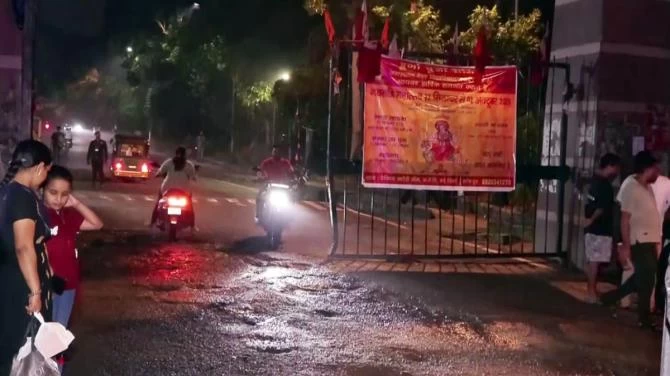
Eyewitnesses described a scene of pandemonium near the Sabarmati Tea Point around 7 p.m. What began as a festive procession carrying a resplendently adorned Durga idol suddenly devolved into shouts, stone-throwing, and physical scuffles. Several students from both sides sustained minor injuries, including bruises and cuts, though no serious injuries were reported. Campus security personnel rushed to the spot to separate the warring factions, but the university administration has yet to issue an official statement on the incident.
At the heart of the dispute was ABVP's pre-planned "Ravan Dahan" ritual, a symbolic act traditionally marking the triumph of good over evil during Dussehra. According to ABVP's JNU unit secretary Vaibhav Meena, the event was intended as a broader critique of what the group labels "anti-national" and "Naxal-inspired" ideologies plaguing the nation. "We burned the effigy to represent the multi-headed monster of extremism figures like Afzal Guru, G. Sai Baba, Charu Majumdar, and others who embody these destructive forces," Meena explained. Notably, the effigy featured pasted photographs of Khalid and Imam - former JNU students currently detained under the Unlawful Activities (Prevention) Act (UAPA) for their alleged roles in the 2020 Delhi riots, as additional "heads" of Ravana.
Meena vehemently accused left-affiliated outfits, including the All India Students' Association (AISA), Students' Federation of India (SFI), and Democratic Students' Front (DSF), of orchestrating an unprovoked assault on the procession. "These groups, gathered at the Tea Point for their own counter-event, pelted stones, hurled footwear, and even targeted our female participants. This is nothing short of an attack on our cultural heritage and religious freedoms," he charged. ABVP's JNU minister Praveen Piyush echoed this sentiment, calling the incident "a shameful desecration of a sacred ritual" and urging the JNU administration to impose immediate disciplinary measures on the perpetrators. "We will not stand idly by while hooligans disrupt traditions that unite us," Piyush added.
The left-wing camp, however, painted a diametrically opposed picture, framing ABVP's actions as a calculated bid to stoke communal divisions under the guise of festivity. In a strongly worded joint statement, the Jawaharlal Nehru University Students' Union (JNUSU)—dominated by leftist factions - denounced the effigy-burning as "a blatant attempt to weaponise religion and peddle Islamophobia." JNUSU President Nitish Kumar highlighted the selective vilification: "Why Umar Khalid and Sharjeel Imam, who have spent over five years in jail awaiting trial, and not icons of hate like Nathuram Godse or Gurmeet Ram Rahim? This isn't about Ravana; it's about targeting Muslim voices and progressive dissent."
AISA, a key player in the JNUSU, went further, rejecting ABVP's assault claims outright. "There was no disruption of the Durga Visarjan by us, we have always supported inclusive celebrations of all faiths," the statement read. "ABVP's narrative is fabricated to deflect from their own hate-mongering. We challenge them to produce evidence of any aggression from our side; it simply didn't occur." The group called on the broader student body to "isolate these forces of discord" and resist what they described as the Rashtriya Swayamsevak Sangh (RSS)-backed agenda of the ABVP to fracture campus unity along religious and ideological lines.
The university has long been a battleground for competing visions of nationalism, with past incidents- including the 2016 sedition row and the 2020 fee-hike protests, leaving lasting scars. Khalid and Imam, both PhD scholars at the time of their arrests, rose to prominence during the nationwide agitation against the Citizenship Amendment Act (CAA) in late 2019. Their prolonged incarceration without conviction has drawn international scrutiny from human rights organizations, who argue it exemplifies the misuse of stringent laws to silence dissent.