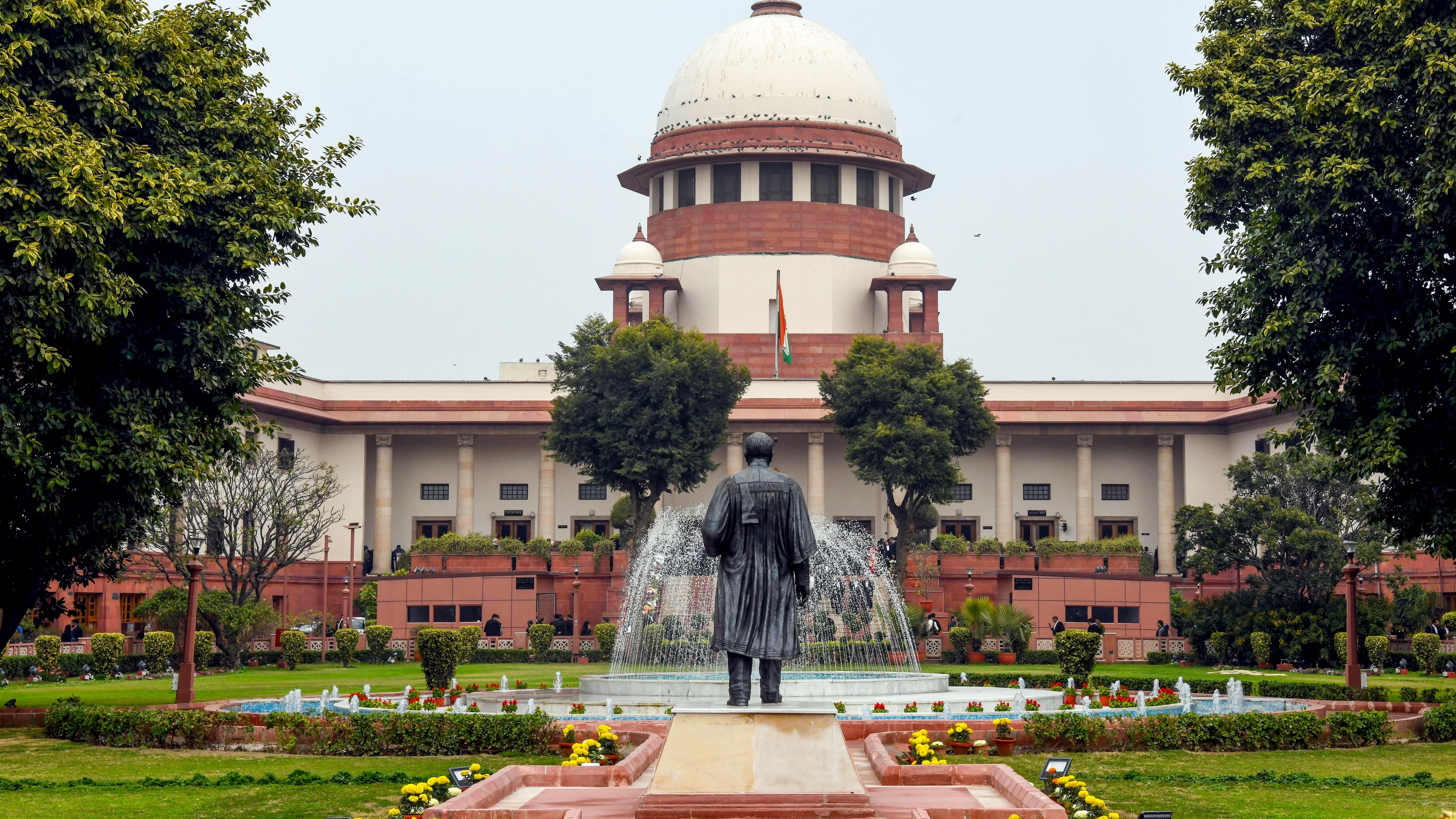
The Supreme Court on Friday delivered a landmark ruling holding that menstrual hygiene and access to menstrual hygiene products are integral to the right to life guaranteed under Article 21 of the Constitution. The judgment marks a significant constitutional acknowledgement of menstrual health as a matter of dignity, privacy, equality and education, particularly affecting millions of school-going girls across the country.
A bench comprising Justices J.B. Pardiwala and R. Mahadevan passed the ruling while hearing a petition seeking nationwide implementation of the Union government’s Menstrual Hygiene Policy for girls studying in government and government-aided schools. The petition highlighted serious deficiencies in basic infrastructure, including the lack of sanitary absorbents and gender-segregated toilets, and examined the impact of these gaps on girls’ education, health and self-respect.
The central question before the Court was whether the absence of adequate menstrual hygiene facilities in schools amounts to a violation of fundamental rights, especially the right to live with dignity and the right to education.
Answering in the affirmative, the bench held that denial of menstrual hygiene management facilities directly compromises the dignity of girl children and, as a consequence, infringes Article 21.
In its detailed reasoning, the Court reiterated that the right to life extends beyond mere physical survival and encompasses conditions necessary for a life of dignity, including menstrual health. It held that access to safe, affordable and effective menstrual hygiene measures is essential for enabling girls to achieve the highest attainable standard of sexual and reproductive health.
The judgment further emphasised that reproductive health cannot be separated from education and access to information. The Court observed that the right to a healthy reproductive life necessarily includes the right to receive appropriate education and accurate knowledge related to sexual and reproductive health, enabling informed choices and participation in society.
Linking menstrual hygiene to the constitutional guarantee of equality, the bench explained that equality under the Constitution is substantive and not merely formal. It observed that genuine equality requires equal opportunities to participate in education and public life. When girls are compelled to miss school due to inadequate toilets, lack of privacy or unavailability of sanitary products, they are effectively denied equal access to education.
Addressing the issue of absenteeism, the Court held that the absence of gender-segregated toilets and menstrual hygiene products in schools can amount to a violation of the right to education. It noted that menstruation-related absenteeism is driven by systemic neglect, infrastructural shortcomings and social stigma, rather than personal choice, placing an unfair and unconstitutional burden on girl students.
The bench placed strong emphasis on dignity as a constitutional value, observing that dignity is reflected in living conditions free from humiliation, exclusion and avoidable suffering. It held that the denial of menstrual hygiene facilities exposes girls to embarrassment and isolation, thereby eroding their dignity. The Court also highlighted the close relationship between dignity and privacy, recognising privacy as an essential component of a dignified life.
Clarifying the scope of the right to privacy, the Court stated that it imposes both negative and positive obligations on the State. Beyond refraining from intrusion, the State has a duty to actively ensure conditions that protect privacy. In the context of menstruation, this includes providing clean, safe and private spaces in schools, along with adequate access to menstrual hygiene products.
The Court noted that the judgment was intended not merely as a legal declaration but as a broader message to students, educators and parents. It expressed hope that the ruling would encourage girls who hesitate to seek support, empower teachers constrained by lack of resources, and prompt families to recognise the consequences of silence and stigma surrounding menstruation, allowing the judgment to resonate beyond the courtroom and into everyday social practice.