The Supreme Court on Friday adjourned for the second consecutive time the bail pleas filed by five accused in the larger conspiracy case related to the February 2020 Delhi riots. A Bench of Justices Aravind Kumar and Manmohan directed that the matter be taken up on 22 September. The brief order simply stated, “List on 22.09.2025.” No reasons were recorded for the deferment.
This comes a week after the same Bench had postponed the hearing on 12 September, noting at the time that the case records had been delivered to their residences only after midnight.
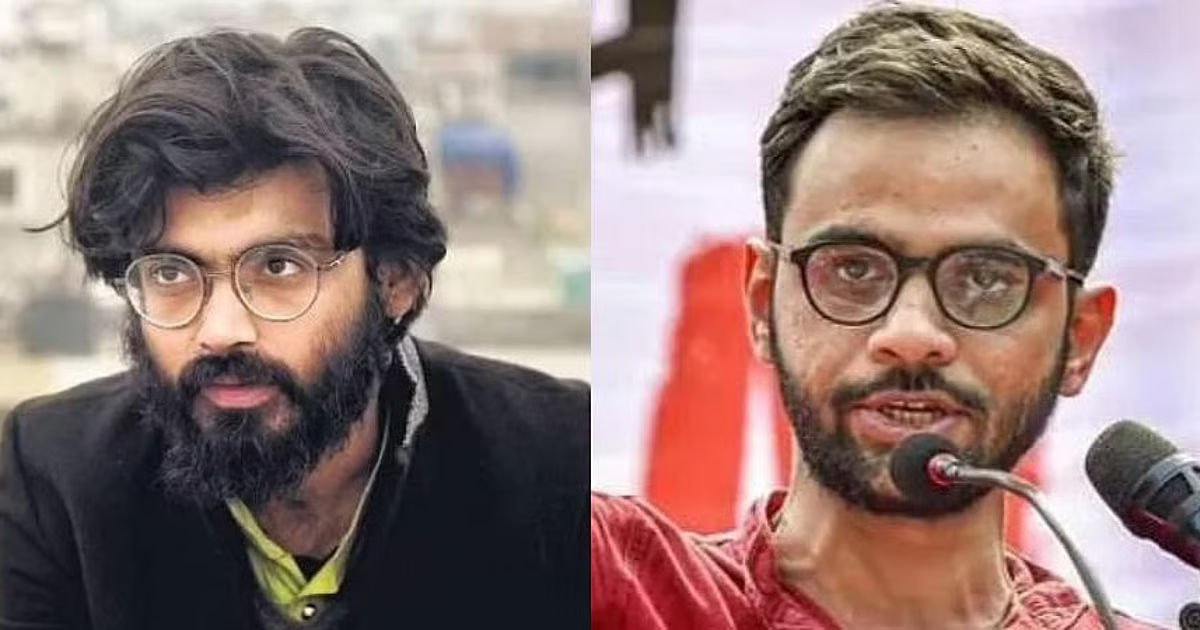
The petitioners include JNU scholar Umar Khalid, activist Sharjeel Imam, Gulfisha Fatima, Meeran Haider, and Shifa-ur-Rehman. Their bail applications were rejected by the Delhi High Court on 2 September.
A Division Bench of Justices Navin Chawla and Shalinder Kaur (since retired) had held that the accused appeared to have played “prima facie grave” roles in the alleged conspiracy behind the violence.
Alongside them, the High Court also denied bail to Khalid Saifi, Athar Khan, Mohd. Saleem Khan, and Shadab Ahmed. The judges endorsed the prosecution’s claim that the riots were not “a regular protest” but rather “a premeditated, well-orchestrated conspiracy.” The bail plea of another accused, Tasleem Ahmed, was dismissed by a separate Bench on the same day.
The Delhi Police, represented by Solicitor General Tushar Mehta and Special Public Prosecutor Amit Prasad, has maintained that the activists were the “masterminds” of the violence.
The communal clashes, which broke out in February 2020 amid protests against the Citizenship (Amendment) Act (CAA) and the proposed National Register of Citizens (NRC), left 53 people dead and more than 700 injured. The accused are charged under provisions of the Unlawful Activities (Prevention) Act (UAPA) and the Indian Penal Code.
Sharjeel Imam, who was arrested on 28 January 2020, has urged the Supreme Court to grant bail on account of his prolonged pre-trial detention of over five and a half years. Umar Khalid, taken into custody on 13 September 2020, has similarly argued that his incarceration for four years without trial is a violation of his fundamental right to liberty.