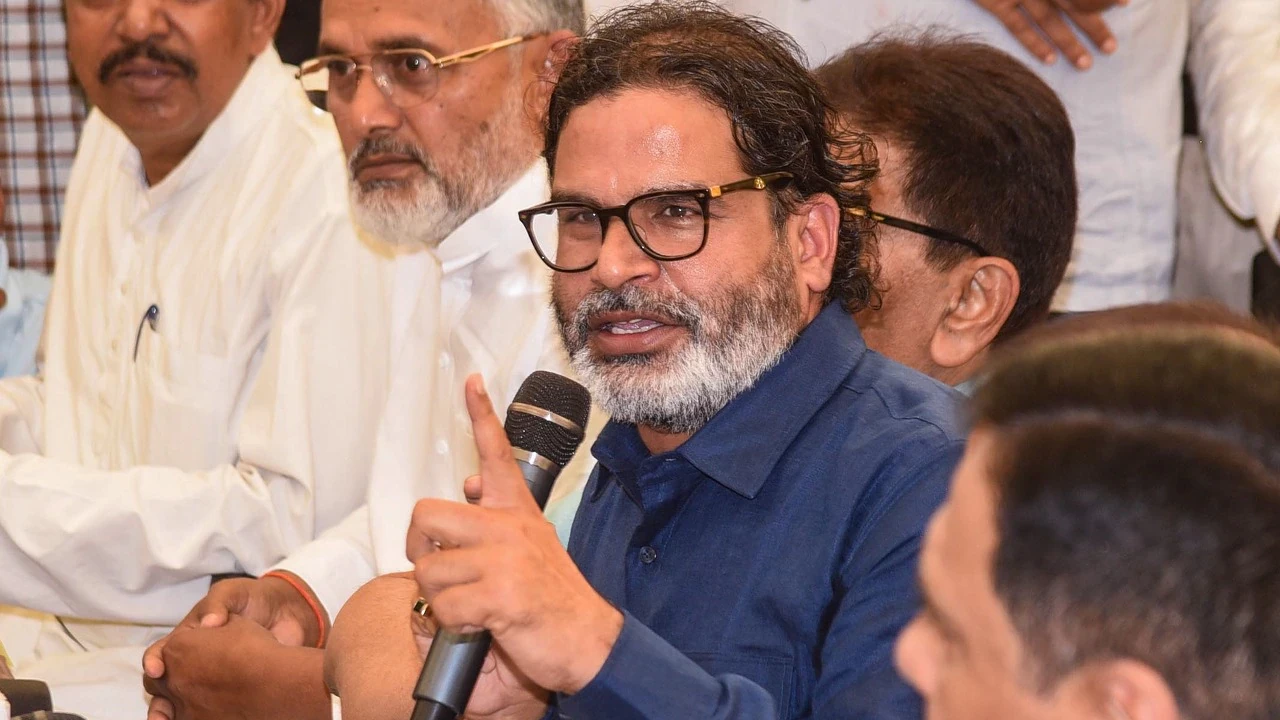
The early rounds of counting in the Bihar Assembly Election 2025 have delivered a setback to Prashant Kishor’s Jan Suraaj Party (JSP), which had drawn significant attention during the campaign but has failed to make an impact as the numbers began to roll in on Friday morning.
By 11 am, trends from the Election Commission showed a decisive edge for the NDA, with the alliance comfortably crossing the majority mark. The JDU was leading in 81 constituencies, the BJP in 78 and the LJRV on 22 seats. On the other side, the INDIA bloc was trailing, with the RJD ahead in 35 seats, the INS in 7 and the CPI(ML)(L) leading in 4 constituencies.
For the Jan Suraaj Party, the picture looked bleak. In several constituencies such as Sikta, Narkatia and Harlakhi, the party had not crossed even the 1,000-vote mark in the initial rounds. There were, however, a few seats where JSP managed to gather a respectable share of votes, enough to cut into the RJD’s vote base. In some of these constituencies, RJD candidates who could have been in the lead were pushed into trailing positions due to vote transfers towards JSP.
Throughout the campaign, JSP enjoyed considerable visibility on social media platforms, with Prashant Kishor’s village-to-village outreach receiving high engagement. However, the ground realities reflected a different picture. In many seats, the party was struggling to even secure the second position, indicating that its digital popularity had not fully translated into electoral gains.
Exit polls had painted a similar scenario before counting day. Most agencies, including People’s Pulse and People’s Insight, projected that the JSP would remain on the margins. People’s Pulse had estimated 0–5 seats for the party, while predicting 133–159 seats for the NDA and 75–101 for the Mahagathbandhan. People’s Insight forecast the NDA within 133–148 seats and the Mahagathbandhan between 87 and 102, while giving JSP a modest 0–2 seat range.
Despite the numbers, Prashant Kishor repeatedly maintained during the campaign that Bihar’s voters would move beyond traditional caste and religious considerations, choosing instead to support a vision geared toward creating a “good society.” The early count, however, suggests that the party’s message has yet to find widespread electoral resonance.
As counting continues through the day, the performance of the Jan Suraaj Party will be watched closely to see whether the later rounds bring any improvement or confirm its status as one of the weakest performers in this election cycle.