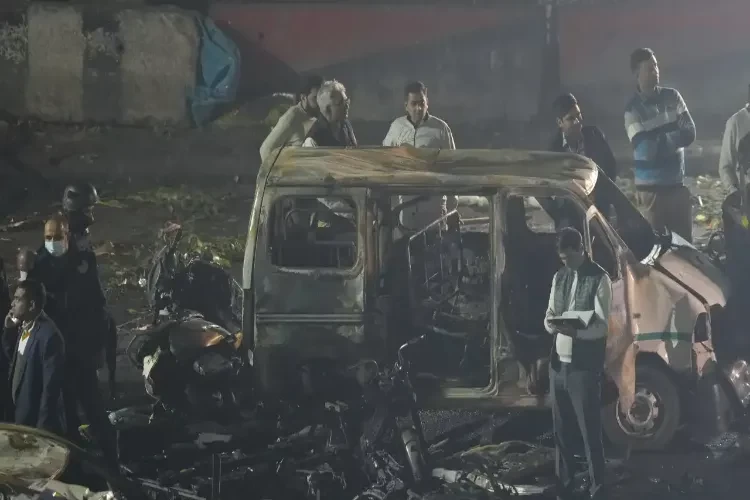
In a significant development in the probe into the devastating car explosion near Delhi's iconic Red Fort, India's National Investigation Agency (NIA) has revealed fresh details pointing to a coordinated suicide bombing. The November 10 incident, which claimed 13 lives and injured over 30, has been classified as the capital's first vehicle-borne suicide attack, echoing the 2019 Pulwama assault that killed 40 CRPF jawans.
NIA confirmed the blast's perpetrator as Dr. Umar Un Nabi, a 32-year-old assistant professor of general medicine at Al-Falah University in Faridabad, Haryana. Forensic analysis of remains from the Hyundai i20 vehicle - modified into an improvised explosive device (IED) loaded with ammonium nitrate fuel oil (ANFO) - verified Nabi's identity as the lone occupant who detonated the bomb. This was the first official confirmation, cementing the apprehension - that Dr Umar was indeed the person behind the wheels, even as there were multiple CCTV footages that surfaced post the explosion, clearly establishing him on the driver’s seat in that same during the course of the day on November 10, leading to the blast.
In another development, NIA has made a fresh arrest in the case - a Kashmir resident who had helped Umar. Identified as a a key collaborator, Amir Rashid Ali from Samboora village in Jammu and Kashmir's Pampore area, was apprehended in Delhi during intensified raids. Ali, the car's registered owner, allegedly traveled to the capital to procure the vehicle and assist in its conversion for the attack. "The accused conspired directly with the suicide operative to execute this terror act," the NIA noted, emphasising Ali's role in logistics.
The agency has now questioned over 73 individuals, including survivors grappling with burns, shrapnel wounds, and hearing impairments. A second vehicle linked to Nabi was confiscated in Faridabad for explosive residue testing. Coordinated operations with Delhi, J&K, Haryana, Uttar Pradesh, and Punjab police have spanned multiple states, yielding coded diaries with 25-30 names and hints of encrypted communications via draft emails and private servers - hallmarks of sophisticated "spycraft."
Emerging facts paint a chilling picture of a "white-collar terror network" infiltrating professional circles. Raids preceding the blast uncovered 2,563 kg of explosives in Faridabad properties rented by another Pulwama doctor, Mujammil Shakeel, tied to Pakistan-based Jaish-e-Mohammed (JeM) and Ansar Ghazwat-ul-Hind. Eight arrests followed, including doctors Muzammil Ahmad Ganai, Adeel Majeed Rather, and Shaheen Saeed - tasked with expanding JeM's women wing. A medical student in Anantnag and professors in Hapur and Kanpur were detained, with nine more suspects held in Uttar Pradesh.
Preliminary probes suggest the detonation was premature, triggered amid panic from J&K police's 20-day crackdown on a JeM module. Nabi had gone off-grid days earlier, renting a Nuh hideout. The blast's timing near a bustling heritage site - despite heavy policing - raises alarms over intelligence gaps in ammonium nitrate procurement, a regulated chemical.