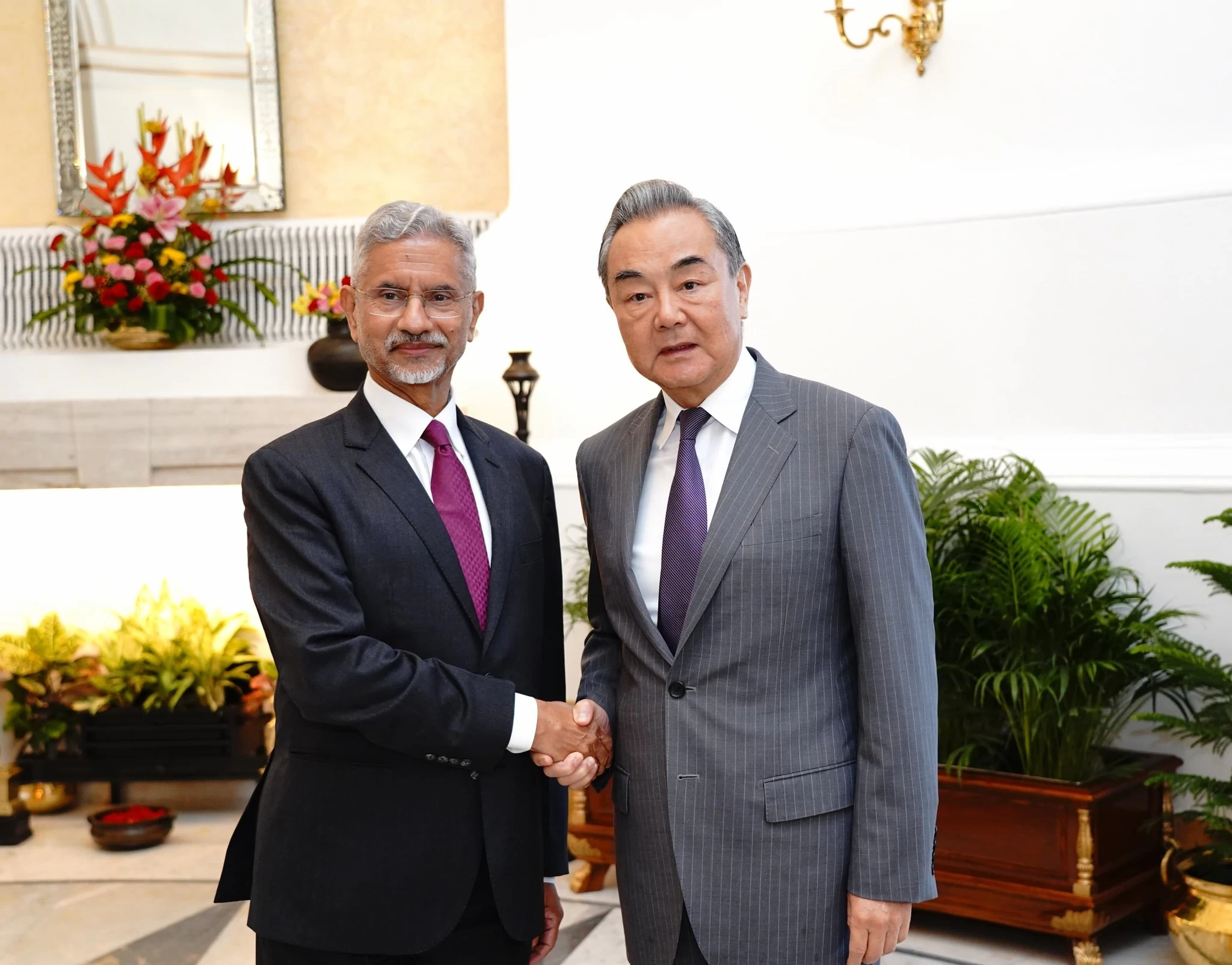
India's External Affairs Minister S. Jaishankar on Monday held a significant bilateral meeting with Chinese Foreign Minister Wang Yi in New Delhi, marking a pivotal moment in India-China relations. The two-day visit by the latter, which included discussions on border issues, trade, and bilateral cooperation, comes at a time when India faces strained ties with the United States due to a recent 50% tariff on Indian goods, including a 25% penalty for purchasing Russian oil.
Jaishankar emphasized the need for a relationship guided by "mutual respect, mutual sensitivity, and mutual interest." He acknowledged the challenging period following the 2020 Galwan Valley clash, which had severely strained bilateral ties. "Differences must not become disputes, nor competition conflict," Jaishankar stated, underscoring the importance of maintaining peace along the Line of Actual Control (LAC). He highlighted ongoing efforts to de-escalate tensions, noting that both nations are working toward a stable and cooperative relationship. The discussions also covered economic ties, river data sharing, border trade, connectivity, and the resumption of direct flights, which have been suspended since 2020 due to the pandemic and border tensions.
Wang Yi, a member of the Politburo of the Communist Party of China, echoed the sentiment of fostering cooperation. He noted that China has maintained peace in border areas and resumed the Kailash Mansarovar Yatra, a significant pilgrimage for Indians. Wang expressed China's commitment to building political trust and expanding cooperation, aiming to contribute to each other's success while providing stability in Asia. The visit follows a meeting between Prime Minister Narendra Modi and Chinese President Xi Jinping in Kazan in October 2024, which set the tone for improving ties.
The timing of Wang's visit is critical, as it precedes Modi's trip to China for the Shanghai Cooperation Organisation (SCO) summit in Tianjin from August 31 to September 1. The U.S. tariffs, imposed by President Donald Trump, have complicated India's strategic position, prompting New Delhi to recalibrate its foreign policy. While India remains cautious due to China's close ties with Pakistan, the discussions signal a pragmatic approach to managing differences and enhancing economic partnerships. Topics like rare earth magnet supplies and potential relaxation of restrictions on Chinese investments in non-sensitive sectors were also on the table.
On August 19, Wang expected to meet with National Security Adviser Ajit Doval for the 24th round of Special Representatives talks on the boundary question, further emphasizing the focus on border stability. Both sides expressed optimism about building a forward-looking relationship, with Jaishankar stressing the fight against terrorism as a shared priority.