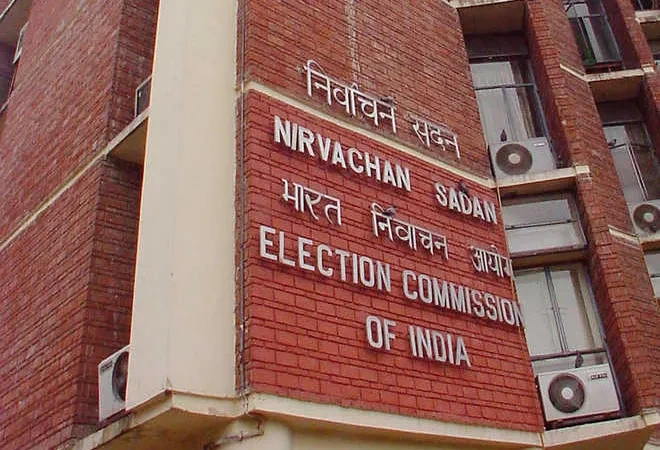
The Election Commission of India (ECI) submitted an affidavit to the Supreme Court on Monday, July 21, 2025, asserting that Aadhaar cards, Electoral Photo Identity Cards (EPIC), and ration cards cannot be considered standalone proof of voter eligibility for the ongoing Special Intensive Revision (SIR) of electoral rolls in Bihar. This statement comes amid a heated legal battle over the revision process, which has sparked concerns about potential voter disenfranchisement ahead of the Bihar Assembly elections scheduled for November 2025.
The ECI’s affidavit was filed in response to a batch of petitions from opposition leaders, including MPs Manoj Jha, KC Venugopal, and Mahua Moitra, as well as civil society organisations like the Association for Democratic Reforms (ADR). These petitioners have challenged the legality, timing, and methodology of the SIR, arguing that it risks excluding marginalised communities, such as the poor, migrants, and Scheduled Castes and Tribes, who may struggle to provide the required documentation.
ECI’s Stance on Documentation
In its affidavit, the ECI provided detailed reasoning for excluding Aadhaar, EPIC, and ration cards as primary documents for voter eligibility:
* Aadhaar Cards: The ECI emphasised that Aadhaar is solely a proof of identity, not citizenship. Citing the Aadhaar Act, 2016, the commission noted that Aadhaar can be issued to non-citizens who are residents of India, making it unreliable for verifying voter eligibility under Article 326 of the Constitution, which mandates Indian citizenship for voting rights.
* Electoral Photo Identity Cards (EPIC): The ECI argued that using EPIC for the SIR would undermine the purpose of the “de novo” revision, as these cards are based on existing electoral rolls. Since the SIR aims to freshly validate voter eligibility, relying on prior voter IDs would be counterproductive.
* Ration Cards: The commission highlighted the prevalence of fake ration cards, referencing a government report from March 7, 2025, which stated that over 50 million counterfeit ration cards had been removed nationwide. This widespread issue renders ration cards untrustworthy for establishing voter eligibility.
The ECI clarified that the list of 11 acceptable documents for the SIR is “illustrative, not exhaustive,” meaning Electoral Registration Officers (EROs) have the discretion to evaluate additional documents on a case-by-case basis. However, the commission rejected the Supreme Court’s earlier suggestion on July 10, 2025, to include Aadhaar, EPIC, and ration cards, maintaining that these documents do not meet the required standards for verifying citizenship.
The ECI defended its authority to conduct the SIR under Article 324 of the Constitution, which grants it plenary powers to supervise and direct elections, including the preparation of electoral rolls. The commission also invoked Article 326 and Sections 16 and 19 of the Representation of the People Act, 1950, to justify its scrutiny of citizenship status. However, it assured the court that failing to prove voter eligibility during the SIR would not result in the termination of an individual’s citizenship.
The affidavit addressed concerns about mass disenfranchisement, with the ECI reporting that as of July 18, 2025, enumeration forms had been collected from over 7.11 crore electors, covering 90.12% of Bihar’s 7.9 crore electorate. Accounting for deceased, shifted, or duplicate voters, the coverage rate rises to 94.68%. The commission emphasised that voters already on the 2025 electoral roll (published January 7, 2025, after a special summary revision) will remain on the draft roll, set to be published on August 1, 2025, provided they submit their enumeration forms. A claims and objections period from August 1 to September 1, 2025, will allow further opportunities for inclusion before the final roll is published on September 30, 2025.
Supreme Court’s Concerns and Petitioners’ Arguments
During a July 10, 2025, hearing, a Supreme Court bench comprising Justices Sudhanshu Dhulia and Joymalya Bagchi expressed concerns about the SIR’s tight timeline, given the impending Bihar elections. The court questioned the ECI’s exclusion of Aadhaar, EPIC, and ration cards, noting that Aadhaar is widely accepted as a primary identity document for other purposes, such as obtaining caste certificates. The bench suggested that the ECI consider these documents, as the list of 11 acceptable documents was not exhaustive, and urged the commission to provide reasons if it chose to reject them.
Petitioners, represented by senior advocates like Abhishek Singhvi and Kapil Sibal, have labeled the SIR a “citizenship screening” exercise, arguing that it places an undue burden on voters to prove their citizenship. They contend that the process violates Section 22 of the Representation of the People Act, 1950, and Rule 21-A of the Registration of Electors Rules, 1960, which require procedural safeguards before removing voters from the rolls. Critics also highlighted that 87% of Bihar’s population possesses Aadhaar cards, compared to only 14% with matriculation certificates and 2% with passports, raising fears that the SIR could disproportionately exclude vulnerable groups.
The SIR has ignited a political firestorm, with opposition parties like the Rashtriya Janata Dal (RJD), Trinamool Congress (TMC) and Congress alleging that the exercise is designed to favour the ruling alliance by selectively purging voters. TMC supremo and West Bengal Chief Minister Mamata Banerjee has called out Election Commission as the political broker of BJP. RJD leader Tejashwi Yadav has called it a backdoor attempt to implement a National Register of Citizens (NRC). Meanwhile, the ECI claims widespread political support for the SIR, asserting that all parties have recognised its necessity to maintain the integrity of the electoral rolls.
The Supreme Court has scheduled the next hearing for July 28, 2025, to further examine the ECI’s powers, the SIR’s procedure, and its timing.