.webp)
In a dramatic escalation of long-simmering grievances, the streets of Leh transformed from a site of peaceful civil disobedience into a scene of chaos and tragedy on Wednesday. What began as a hunger strike demanding greater autonomy for the strategically vital Himalayan region exploded into widespread clashes, claiming the lives of four young protesters and leaving over 60 others wounded. The violence has thrust climate activist Sonam Wangchuk into the center of a fierce political storm, with the central government accusing him of fuelling the unrest through inflammatory rhetoric, while Wangchuk himself decried the events as a heartbreaking failure of non-violent resistance.
The day dawned under a veil of tension in Ladakh's capital. A total shutdown, called by local youth groups, brought the city to a standstill, with shops shuttered and roads eerily quiet. At the heart of the agitation was Wangchuk's 15-day hunger strike, launched on September 10 alongside 14 supporters, to press for two core demands: full statehood for Ladakh and its inclusion under the Sixth Schedule of the Indian Constitution. This provision would grant tribal-majority areas like Leh and Kargil enhanced legislative powers over land, jobs, and cultural protections - safeguards many locals feel were stripped away when the region was carved out as a Union Territory in 2019, following the abrogation of Jammu and Kashmir's special status.
The tipping point came on Tuesday evening, when two elderly strikers - a 72 year-old man and a 62 year-old woman, were rushed to the hospital due to deteriorating health. Their hospitalisation ignited outrage among the youth, who viewed it as a symbol of the government's indifference. By Wednesday morning, thousands had converged at the protest site near Leh's historic polo ground, chanting slogans for justice and autonomy. What followed was a rapid unraveling: a faction of young demonstrators, described by eyewitnesses as including schoolgirls, college students, and even Buddhist monks, broke away from the main gathering. They surged toward government buildings, hurling stones and setting fire to a local Bharatiya Janata Party (BJP) office, the Hill Council secretariat, and several police vehicles.
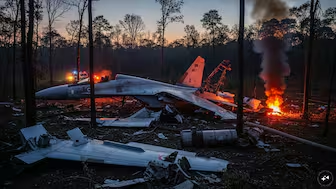
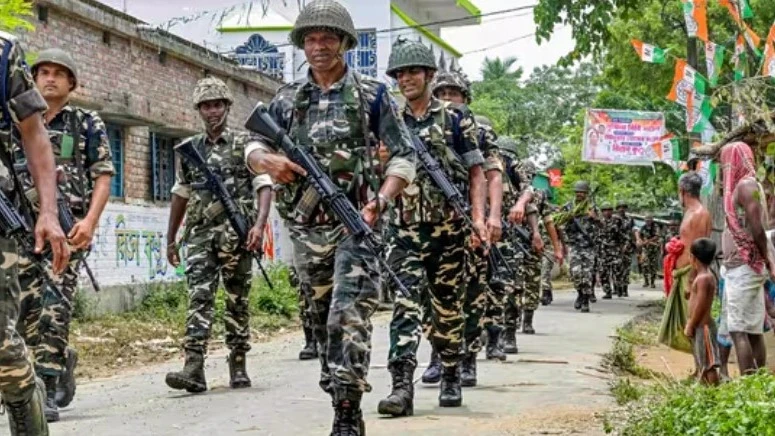
Security forces, outnumbered and facing a barrage of projectiles, responded with tear gas and eventually live rounds. Clouds of smoke billowed over the ancient city as flames engulfed structures, and the air filled with cries of anguish. By midday, the administration imposed a strict curfew under Section 163 of the Bharatiya Nagarik Suraksha Sanhita, prohibiting assemblies of more than five people and suspending internet services to curb misinformation. The annual harvest festival, a cherished Ladakhi tradition, was abruptly canceled
Official figures paint a grim picture: four civilians - described as youthful protesters in their late teens and early 20s, succumbed to gunshot wounds, with initial reports suggesting police firing in self-defence. Over 50 civilians and 22 police personnel, including a senior superintendent, required medical attention for injuries ranging from fractures to shrapnel wounds. Hospitals in Leh overflowed, with medics working overtime amid fears of further casualties. Unofficial tallies from activists hinted at up to five deaths early on, but authorities have stuck to the confirmed count of four.
Families of the deceased gathered outside medical facilities, mourning sons and daughters who had joined the fray “not out of malice, but desperation”. "These were our future leaders, not agitators," wept one mother, clutching a photo of her son. The violence marked one of the darkest chapters in Ladakh's recent history, a region long synonymous with serene monasteries and breathtaking vistas rather than street battles.
As sirens wailed and barricades rose, Wangchuk - renowned for his 2013 "ice stupa" innovation to combat water scarcity and his role in the 2020 campaign against J&K's status change, made an appeal. In a live video address from the protest venue, the 58-year-old engineer-turned-activist announced the immediate end to his fast. "This is one of the saddest days of my life," he said, his face gaunt from weeks without solid food. "My message of a peaceful path has failed today. I appeal to the youth: please stop this nonsense. It only damages our cause and brings instability to Ladakh and the nation."
Wangchuk attributed the outburst to a "Gen-Z revolution," born of profound frustration. For five years, he argued, Ladakhi youth have faced joblessness, cultural erosion, and broken promises, exacerbated by the central government's direct rule, which locals say favours outsiders in employment and land deals. "Peaceful protests aren't yielding results. The youth warned us for days that frustration was boiling over," he added, rejecting any notion of external orchestration. He urged security forces to halt tear gas use and called on New Delhi to show "sensitivity" by accelerating dialogue. In a nod to broader unrest, he drew parallels to youth-led movements in Nepal and the Arab Spring, framing the clashes as a cry against systemic neglect rather than premeditated anarchy.
The Ministry of Home Affairs (MHA) issued a strongly worded statement late Wednesday, pinning the blame squarely on Wangchuk. "It is clear that the mob violence was guided by Sonam Wangchuk through his provocative statements," the release declared, accusing him of misleading crowds despite ongoing negotiations. The MHA highlighted a high-powered committee, reconstituted in November 2023 and led by Minister of State for Home Nityanand Rai, which has held multiple rounds of talks with the Leh Apex Body and Kargil Democratic Alliance - the key stakeholder groups. The next session is slated for October 6. "Police fired only in self-defence after over 30 personnel were assaulted," the statement emphasised, vowing legal action against instigators. Sources within the government described the episode as "engineered deliberately," lamenting that Ladakh's "young population is paying a huge price for narrow politics and personal ambitions." BJP leaders amplified this narrative, with IT cell head Amit Malviya alleging Congress involvement, pointing to footage of a local party councillor amid the crowd. "Is this the unrest Rahul Gandhi desires in Ladakh?" he posted on X.
Wangchuk dismissed these charges as deflection. "No political party here has the pull to mobilise 5,000 youth," he countered in a virtual press briefing. "This is about unkept promises - the Sixth Schedule, job quotas, a public service commission, and separate parliamentary seats for Leh and Kargil." He also alluded to personal harassment, including a CBI probe into his activism, but insisted his fight remains non-partisan.