India mounted a sharp diplomatic offensive against Pakistan at the United Nations, months after Islamabad pushed through a controversial constitutional amendment that expanded the powers of its military leadership, urging the neighbouring country to reflect on its commitment to the rule of law.
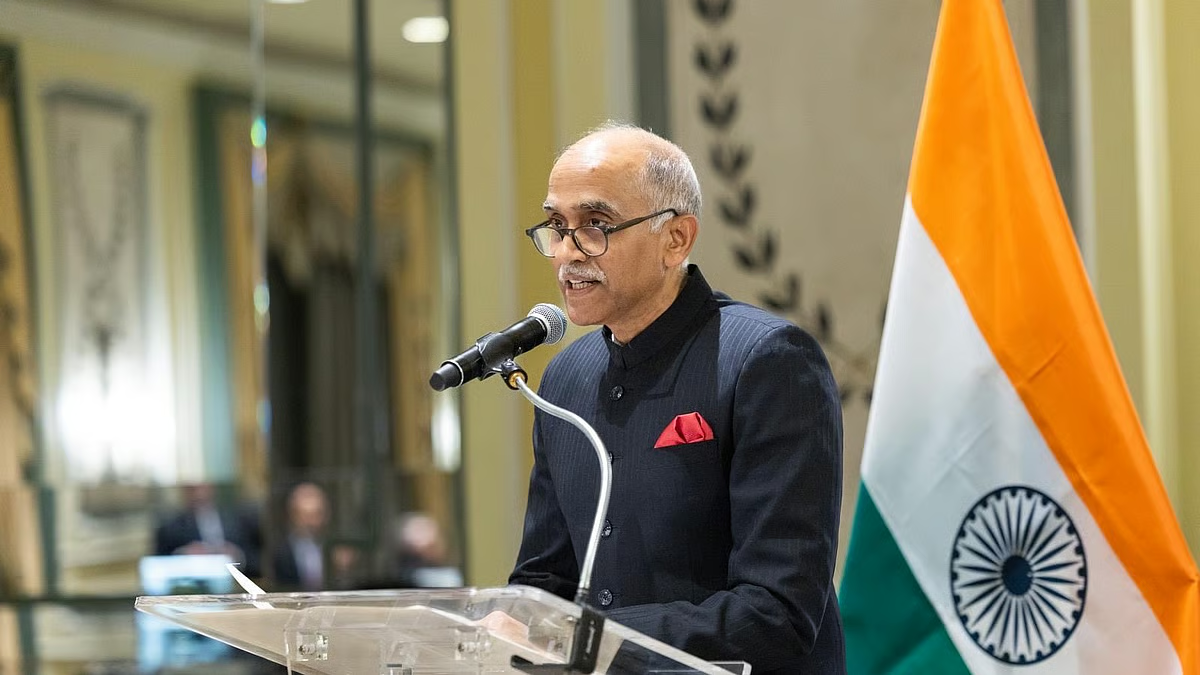
Speaking at an open debate of the United Nations Security Council, India’s Permanent Representative Parvathaneni Harish criticised Pakistan’s internal political trajectory, particularly the role of its armed forces in shaping constitutional changes.
Without naming Pakistan’s army chief directly, the Indian envoy delivered a stinging rebuke. “Pakistan is well advised to introspect about the rule of law,” he said. “It could start by asking itself how it has allowed its armed forces to engineer a constitutional coup through the 27th amendment and grant lifetime immunity to its Chief of Defence Forces.” Harish was responding to remarks made by Pakistan during the debate on Monday, turning the spotlight on Islamabad’s domestic governance and civil-military relations.
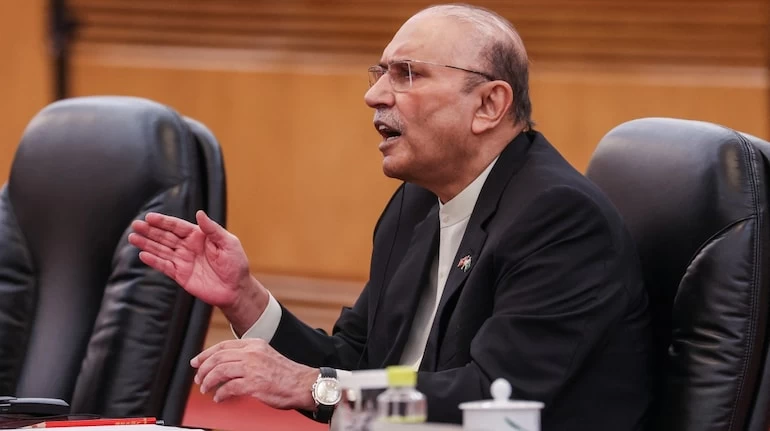
The comments come in the wake of Pakistan’s 27th Constitutional Amendment, passed in November, which restructured the country’s military command. The amendment paved the way for Asim Munir to be appointed as Pakistan’s first Chief of Defence Forces (CDF) for a five-year term, consolidating command of the army, navy and air force under a single authority. His appointment was proposed by Prime Minister Shehbaz Sharif.
Alongside expanded operational control, the amendment granted the CDF lifetime immunity from arrest and prosecution, a provision that sparked concern among international observers and rights groups.
Those concerns were echoed by Volker Türk, the UN High Commissioner for Human Rights, who warned that the amendment had been rushed through “without broad consultation and debate with the legal community and wider civil society”.
India’s critique of Pakistan’s constitutional changes was delivered in the same breath as a strong rebuttal of Islamabad’s account of Operation Sindoor. Responding to comments by Pakistan’s UN ambassador, Harish accused Islamabad of distorting facts.
“I now respond to the comments of the representative of Pakistan, an elected member of the Security Council, which has a single-point agenda to harm my country and my people,” he said. “He has advanced a false and self-serving account of Operation Sindoor in May last year.”
India has consistently maintained that the operation, launched on May 7, 2025, was aimed exclusively at terrorist groups and infrastructure in Pakistan, and was carried out in retaliation for the April 22 Pahalgam terror attack, which killed 26 civilians.
Referring to the Security Council’s own stance, Harish said the international body had called for accountability for the attack. “This august body itself demanded that the perpetrators, organisers, financiers and sponsors of this reprehensible act of terrorism be held to account and brought to justice. That is precisely what we did,” he said.
The Indian envoy stressed that New Delhi’s response was restrained. He described India’s actions as “measured, non-escalatory and responsible”, adding that Pakistan had sought an end to hostilities following the operation.
Together, India’s remarks framed Pakistan’s internal constitutional changes and its criticism of Indian military action as part of a broader pattern that, New Delhi argued, undermines democratic norms and regional stability.