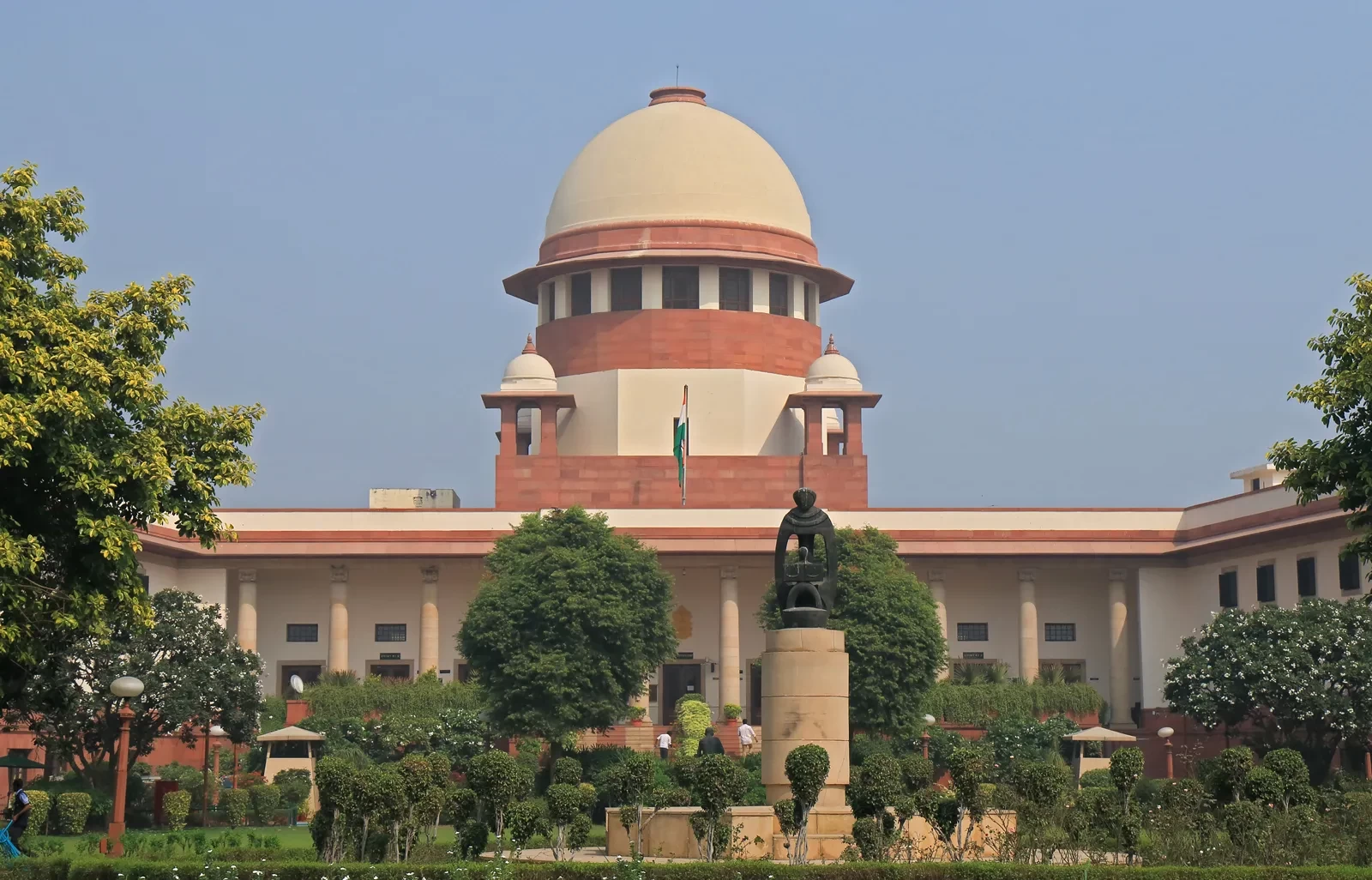
The Supreme Court on Tuesday reaffirmed that Aadhaar can be accepted as an identity document in West Bengal’s Special Intensive Revision (SIR) of electoral rolls, observing that courts must follow the law as it currently stands under the Representation of the People Act, 1950. A Bench led by Chief Justice of India Surya Kant, along with Justices Joymalya Bagchi and Vipul Pancholi, was hearing petitions connected to the ongoing voter-roll revision exercise in the state.
The controversy traces back to the Election Commission’s original SIR guidelines, which listed 11 documents for identity verification but did not include Aadhaar. The Supreme Court, in an earlier order last year, directed that Aadhaar should also be accepted as a verification document, noting that Section 23(4) of the Representation of the People Act recognises Aadhaar as a document for establishing identity, if not citizenship. The Court reiterated that position during Tuesday’s hearing, making clear that Aadhaar’s inclusion flows from statutory backing rather than judicial discretion.
When a petitioner opposed Aadhaar’s use citing alleged large-scale fraud, the Bench said the judiciary cannot override legislation still in force. The Court orally observed that so long as the statute permits Aadhaar, it must be accepted. "It is practically seen throughout the country, most of Aadhaar is made in border districts. If the Court can add one line, to control fake documents, it is seen throughout the country, whenever there are Bangladeshis or Rohingyas captured by the police, the Aadhaar is from Bengal. This is the practical situation," submitted Advocate Ashwini Upadhyaya. Advocate Upadhyaya, has sought nationwide SIR, urged before the Bench that fake Aadhaar cards were widespread and claimed many such cases originate from border districts. He urged the Court to add safeguards against alleged document fraud.
The CJI indicated that concerns about misuse might require scrutiny but cautioned against raising such issues prematurely, stating the matter may need a deeper probe but this was not the correct time. CJI said, "The matter may require a deeper probe. But this is not the timing. Lest we are misunderstood by anyone, let the right atmosphere and environment come."
Justice Bagchi was more direct, telling the petitioner to pursue legislative change instead of repeatedly arguing the issue before the Court. He said if Aadhaar fraud exists on an “industrial scale,” it would require statutory regulation and therefore a representation to the Union Government seeking amendment of the law.
"Mr. Upadhyay, the Solicitor General is here. You make a representation to the Union of India to amend the Representation of the Peoples Act. Let Mr.Upadhyay approach the Government. This cannot be a discussion before our forum always. If Aadhaar has been fraudulently procured on an industrial scale, then it requires to be statutorily regulated. Because the Representation of the Peoples Act was amended and Aadhaar was brought in as a document which will prove identity. We have to acknowledge that," Justice Bagchi said. The Bench also reiterated a key legal distinction central to the controversy: Aadhaar can only serve as proof of identity, not proof of citizenship.
The remarks come amid intense political and legal debate over the SIR exercise in West Bengal, where questions about documentation, timelines and verification standards have triggered litigation and allegations from multiple sides. By reiterating that Aadhaar is permissible under existing law, the Court has effectively clarified the framework within which the revision process must proceed unless Parliament amends the statute. The Supreme Court, in essence, has drawn a clear line - policy objections to Aadhaar belong before lawmakers, not judges, as long as current law recognises it as a valid identity document.