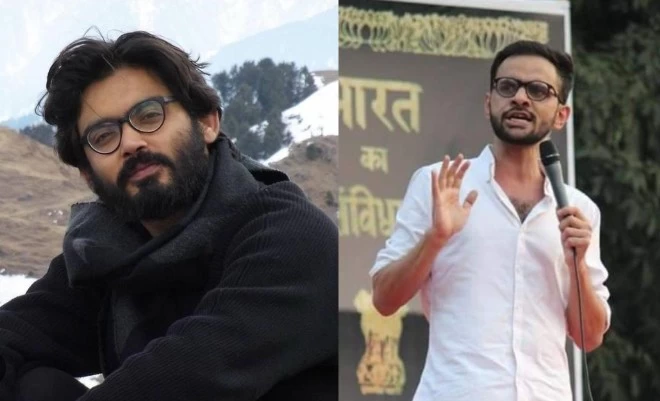
The Delhi Police on Thursday strongly opposed the bail pleas of activist Umar Khalid and others in the 2020 Delhi riots case, describing the violence as a “planned operation for regime change” allegedly orchestrated by the accused.
In a detailed 389-page affidavit filed before the Supreme Court, the police claimed that the accused were responsible for the delay in trial and described this delay as part of a “well-planned conspiracy.” Citing the seriousness of the charges under the Unlawful Activities (Prevention) Act (UAPA), the affidavit stated, “In offences that strike at the very root of the integrity of India, ‘jail and not bail’ is the rule.”
The police maintained that the allegations against the petitioners were “prima facie true” and that the “onus of refuting this presumption rests with the petitioners, which they have failed to discharge.” The affidavit further asserted that bail could not be granted merely on the basis of delay, especially when the delay was allegedly caused by the accused themselves.
Earlier this week, the Supreme Court bench of Justices Aravind Kumar and NV Anjaria expressed displeasure over the Delhi Police’s failure to file a timely response and questioned the need for an affidavit in a bail matter. The court asked the police to clarify whether individuals who have been in jail for over five years without trial could be granted bail on the grounds of prolonged incarceration. The matter is scheduled for hearing on Friday.
A day before the hearing, the Delhi Police submitted its written response, insisting that Khalid and others did not deserve bail and attributing the delay in trial primarily to the accused themselves.
The affidavit claims there is “ocular, documentary, and technical evidence” establishing the petitioners’ “deep-rooted complicity” in orchestrating the riots. According to the police, the alleged conspiracy sought to “strike at the very heart of India’s sovereignty and integrity” by “destroying communal harmony” and “inciting the public to the point of armed rebellion.”
The document also refers to “international theories” describing such organised movements as “Regime Change Operations.” It alleges that encrypted chats and other evidence demonstrate that the riots were “pre-planned to coincide with the visit of then US President Donald Trump” to attract international attention and portray the Citizenship (Amendment) Act (CAA) as a global human rights issue. “The CAA was carefully chosen as a radicalising catalyst, camouflaged as a peaceful protest,” the affidavit stated.
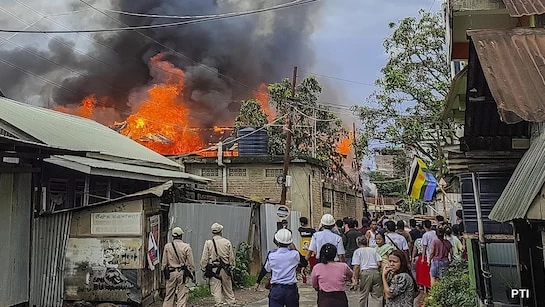
The Delhi Police claimed that the violence during the 2020 riots was not confined to the national capital but formed part of a larger conspiracy aimed at inciting nationwide unrest. In Delhi alone, 753 FIRs were registered, resulting in multiple deaths and extensive damage to property. The affidavit noted that similar outbreaks of violence occurred across several states during the anti-CAA protests, with Uttar Pradesh witnessing unrest in over twenty districts and at least nineteen to twenty-three fatalities. Assam reported five deaths and more than 1,500 arrests and detentions, while West Bengal saw the torching of five trains, vandalism at railway stations, and property losses exceeding ₹70 crore.
According to the police, violent protests also erupted in Kerala, Karnataka, Maharashtra, and Bihar. In Kerala, stone-pelting and damage to buses were reported in several districts, leading to hundreds of arrests. Karnataka recorded multiple FIRs, two deaths in police firing, and widespread arson, while Maharashtra reported sporadic incidents in Hingoli district. Bihar, too, saw clashes across major towns such as Patna and Muzaffarpur, with 1,550 preventive arrests and the formation of a Special Investigation Team to probe the violence.
Summing up its position, the Delhi Police alleged that the accused were involved in a “premeditated conspiracy” aimed at destabilising the government and damaging India’s image globally. “The materials on record establish beyond doubt that the conspiracy was aimed at portraying the CAA issue as a pogrom against the Muslim community and disrupting India’s public order,” the affidavit said.