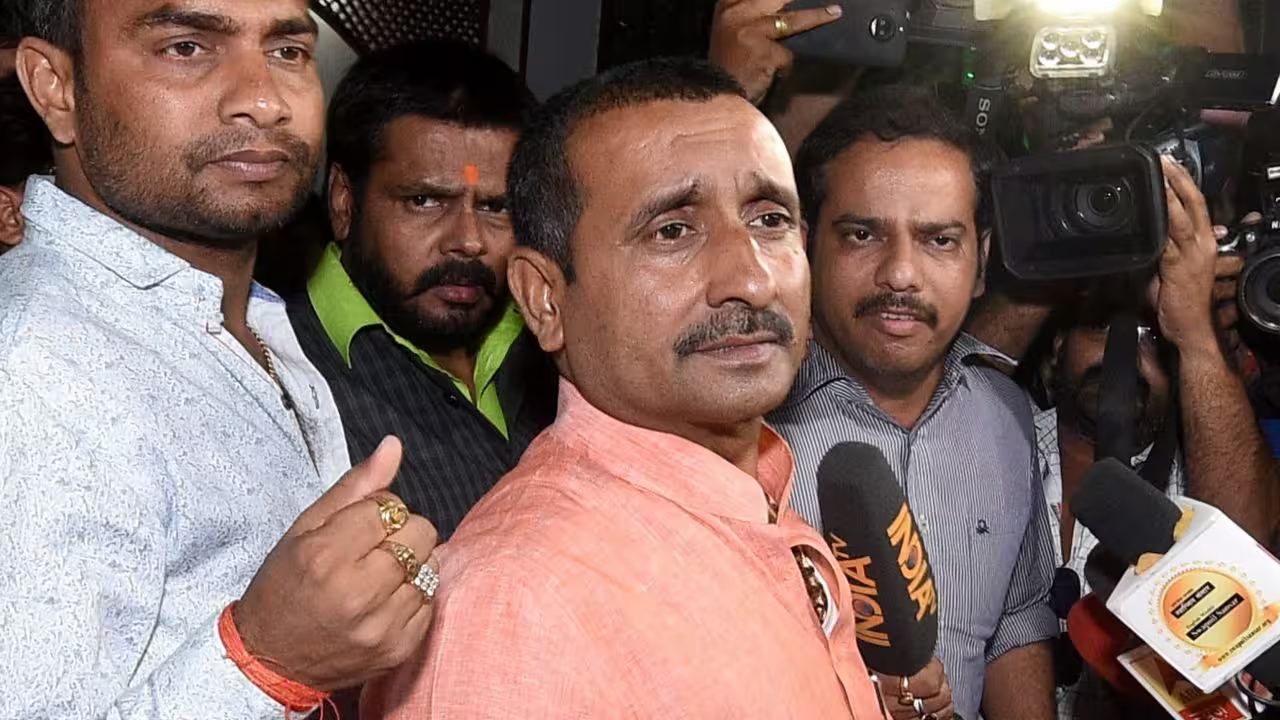
The Delhi High Court on Monday refused to suspend the 10-year prison sentence given to former BJP MLA Kuldeep Singh Sengar in connection with the custodial death of the Unnao rape survivor’s father. Rejecting Sengar’s plea, the court noted that there were no grounds to grant relief.
“No grounds are made out for grant of relief. The application seeking suspension of sentence is dismissed,” justice Ravinder Dudeja observed. The court ruled that Sengar could not seek temporary bail on the ground of prolonged incarceration and delays in hearing his appeals, noting that he himself had contributed to the delay by filing multiple applications. Instead, the High Court directed that the pending appeals be “heard expeditiously”.
Appeals against Sengar’s convictions in both cases remain pending, the December 2019 verdict that sentenced him to life imprisonment for raping the survivor, and the March 2020 verdict that found him guilty in the custodial death case.
In the custodial death matter, Sengar was awarded 10 years’ rigorous imprisonment. The trial court had then refused to show “any leniency”, observing that the victim’s father, the family’s sole breadwinner, had been arrested on a false Arms Act case allegedly at Sengar’s behest and later died in police custody. Sengar’s brother, Atul Singh Sengar, was handed an identical sentence.
The Unnao case returned to the spotlight last month after another bench of the Delhi High Court suspended Sengar’s sentence in the rape case and granted him bail pending appeal. That order, passed by Justices Subramonium Prasad and Harish Vaidyanathan, held that Sengar’s position as an MLA at the time did not justify treating him as a “public servant” and ruled that provisions of the POCSO Act were not applicable.
The bench also noted that Sengar had already spent seven-and-a-half years in custody, which it described as “more than the minimum” sentence prescribed under law. He was subsequently released on conditional bail, including a personal bond of ₹15 lakh, restrictions on travel outside Delhi, and a prohibition on entering within five kilometres of the survivor.
The bail order drew widespread condemnation and triggered intense public outrage. Tensions escalated further after disturbing scenes emerged from Delhi, where the survivor and her mother were reportedly intimidated while attempting to protest against Sengar’s release. Speaking to reporters after the incident, the survivor’s mother broke down, saying, “We did not get justice. My daughter has been held captive. It seems they want to kill us.”