The Maharashtra State Election Commission on Tuesday announced the long-pending election schedule for 29 municipal corporations, including Mumbai and Thane, bringing an end to years of delay largely caused by legal disputes over OBC reservation. Polling will be held on January 15, with counting and results scheduled for January 16. The Model Code of Conduct has come into force with immediate effect.
Making the announcement at a press conference, the Commission said nearly 3.48 crore voters across the state would be eligible to vote. Municipal corporation elections had been stalled for five to seven years, and in some cases even longer, following litigation related to OBC reservation. The Supreme Court’s recent directions paved the way for local body elections, after which polls for municipal councils and nagar panchayats were held on December 2. The announcement of municipal corporation elections follows that exercise.
According to the schedule, nomination papers will be accepted from December 23 to December 30. Scrutiny of nominations will take place on December 31, while candidates may withdraw their nominations until January 2. The final list of candidates and symbol allotment will be released on January 3.
Polling will be conducted on January 15, and results will be declared the following day.
The term of 27 municipal corporations in the state has already expired, while elections will also be held for two newly formed civic bodies, Jalna and Ichalkaranji. The voters’ list as of July 1, 2025, will be used for the elections. Since the electoral roll has been received from the Election Commission of India, the State Election Commission clarified that it does not have the authority to delete names from the list.
A total of 39,147 polling stations will be set up across Maharashtra, including 10,111 in Mumbai alone. The Commission will deploy 11,349 control units and around 22,000 ballot units, with nearly 1.96 lakh staff members involved in the conduct of the polls.
The Commission has also prescribed expenditure limits for candidates. In Mumbai and other ‘A’ category municipal corporations, candidates may spend up to ₹15 lakh. The ceiling has been fixed at ₹13 lakh for ‘B’ category corporations, ₹11 lakh for ‘C’ category, and ₹9 lakh for ‘D’ category civic bodies.
Mumbai will follow the single-member ward system, under which voters will cast only one vote. The remaining 28 municipal corporations will have wards with one to five members, and voting will be conducted accordingly. Nomination forms will be accepted only in offline mode.
Candidates who do not currently possess caste validity certificates will be required to submit them within six months of the election.
To enhance voter awareness, the Commission has prepared special outreach reels. Polling stations will be equipped with ramps and wheelchairs to ensure accessibility for senior citizens and persons with disabilities. Campaigning and political advertisements will be prohibited during the 48-hour silence period before polling, in accordance with municipal election rules.
Elections will be held for a total of 2,869 seats across the 29 municipal corporations. Of these, 1,442 seats are reserved for women, 759 for Other Backward Classes, 341 for Scheduled Castes, and 77 for Scheduled Tribes.
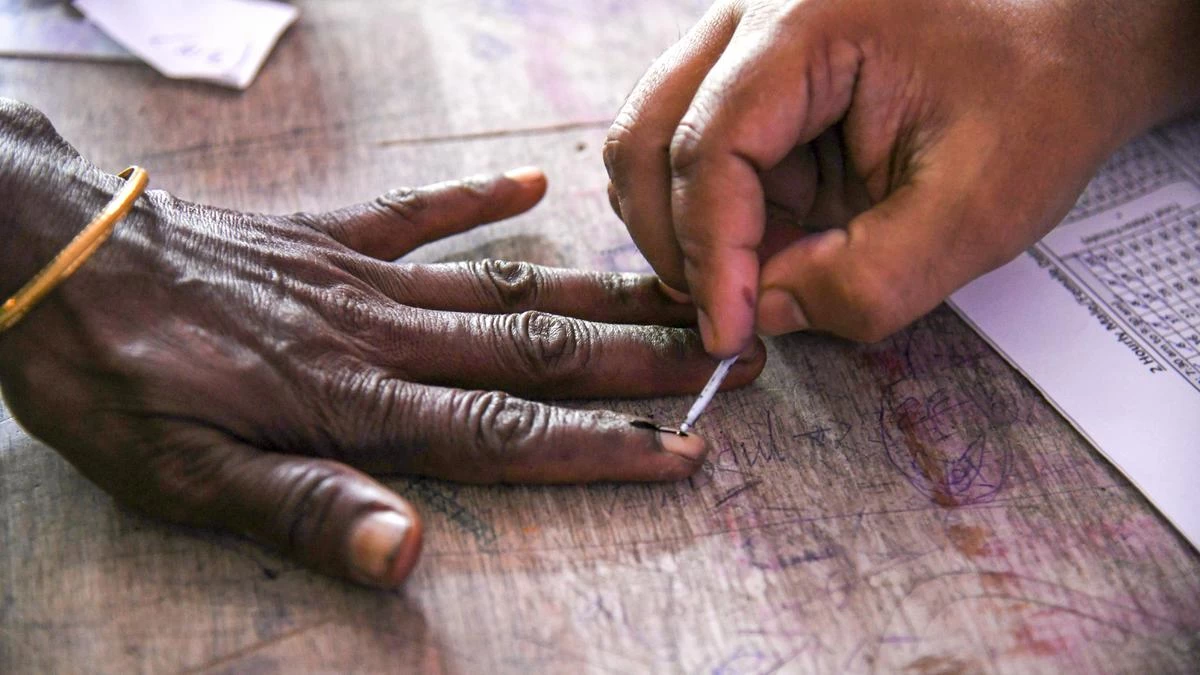
Addressing concerns over duplicate voters, the Commission said around 15 lakh voters had been identified as potential duplicate entries. Such voters will have two star marks against their names in the electoral roll. Door-to-door verification has been conducted, and affidavits have been obtained from these voters indicating where they intend to vote. Those who could not be surveyed will be required to submit an undertaking at the polling station.