.webp)
As India braces to revel in the upcoming Christmas festivities, a series of incidents across the country has brought renewed attention to what Christian groups and civil liberties advocates describe as a pattern of intimidation, disruption and moral policing by Hindu vigilante groups. From pastors being confronted and filmed in public, to schoolchildren forced into religious recitations, to street vendors being driven away for selling Christmas merchandise, the festive season has been marked by fear rather than celebration.
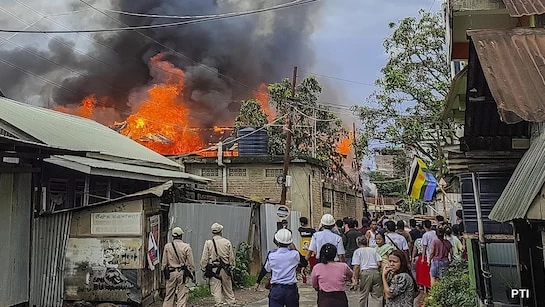
Christmas 2025 celebrations have been overshadowed by escalating attacks in Chhattisgarh, especially in tribal areas over burial disputes. In Kanker district's Badetevda village, a mob set fire to a Christian Adivasi's home, vandalised churches and a prayer hall, and clashed with police after opposing a Christian burial on family land, part of a recurring pattern where Hindutva-linked groups demand exhumation or traditional rites, leading to arson and threats.Adding to the tension, inflammatory posters called for a statewide bandh against Christians on Christmas Eve, 24 December 2025, prompting urgent pleas from church bodies to the Union Home Minister for protection.
Simple acts of celebration have drawn aggression. In Delhi’s Lajpat Nagar, alleged Bajrang Dal members confronted Christian women and children wearing Santa Claus hats, accusing them of proselytisation and forcing them to leave. Videos captured the distress as activists shouted, insisting such activities belong "in your own homes."
Hindu vigilantes targeted and threatened vendors in Puri, Odisha. An elderly Hindu couple and others selling Santa hats near the Jagannath Temple were threatened by a group in an SUV. One leader declared, “This is a Hindu country, here Christians don’t have any say,” demanding they sell Jagannath-related items instead or leave. Even a Hindu vendor from Rajasthan faced fury for selling "Christian" goods to earn a living.
In Ghaziabad, Uttar Pradesh, Sunnyur Rahaman, more popularly known as Sri Satyanisht Arya, a Bangladeshi national with a controversial shift towards Hindutva rhetoric, aggressively confronted Pastor Raju Sadasivam and his wife in public. Filming them provocatively, he made derogatory remarks about Christianity while claiming to expose conversions. Rights groups labelled it hate speech and intimidation.
Christmas celebrations in schools weren’t spared either, in Virar, Maharashtra, a private school with no Christian students dressed over 200 children in Santa outfits to be a part of a festive play. Bajrang Dal activists protested, demanding a recitation of the Hanuman Chalisa to "reaffirm Hindu values." The school complied, with pupils and staff chanting in unison, averting escalation but underscoring institutional vulnerability.
In Haridwar, Uttarakhand, an Uttar Pradesh Tourism Department hotel cancelled planned Christmas events, including children's games, after protests from the Ganga Sabha and other groups. They deemed celebrations on the Ganges banks an affront to sanctity, warning of consequences. The hotel clarified it was non-religious fun but scrapped plans to avoid controversy.
Down south, in Kerala, known for harmony, RSS workers allegedly attacked a children's Christmas carol group in Palakkad's Pudussery area, damaging instruments and traumatising minors. Police arrested those involved, drawing condemnation from church and political leaders as an assault on religious freedom.
Places of worship saw direct violations. In Jabalpur, Madhya Pradesh, multiple incidents unfolded. BJP district vice-president Anju Bhargava allegedly assaulted a visually impaired woman during a Christmas feast for differently-abled children, accusing organisers of conversions. Attendees insisted it was merely a meal. Separately, men barged into a church in Madhotal, chanting “Jai Shri Ram,” disrupting prayers and clashing with congregants.
It is important to note that the Vishwa Hindu Parishad (VHP) issued a 13 December letter urging Hindus to boycott Christmas entirely for "cultural awareness," linking participation to aiding conversions. VHP's Surendra Gupta stated, “This issue is not about religious freedom, but rather about conversion. Christian missionaries exploit our tolerant nature.” The appeal targeted shopkeepers displaying greetings, warning of "cultural confusion." Critics, like Supreme Court lawyer Shahrukh Alam, called it contrary to constitutional fraternity.
According to the United Christian Forum, more than 700 incidents of violence against Christians were recorded by November 2025. Its convenor, A.C. Michael, has said attacks on Christians have risen by nearly 500% since 2014. Christians account for about 2.3% of India’s population, a figure that has remained largely stable for decades. Yet accusations of conversion continue to dominate public discourse, often without substantiation.
Taken together, the incidents reported this Christmas season point to a broader pattern in which religious identity is increasingly being policed in public spaces. From churches and schools to markets and neighbourhood streets, celebrations associated with Christmas, religious or cultural, are being disrupted by Hindu groups under the banner of opposing conversion. As Christmas draws near, the question being raised by many is no longer about a festival alone, but about the state of religious freedom and equal citizenship in India.