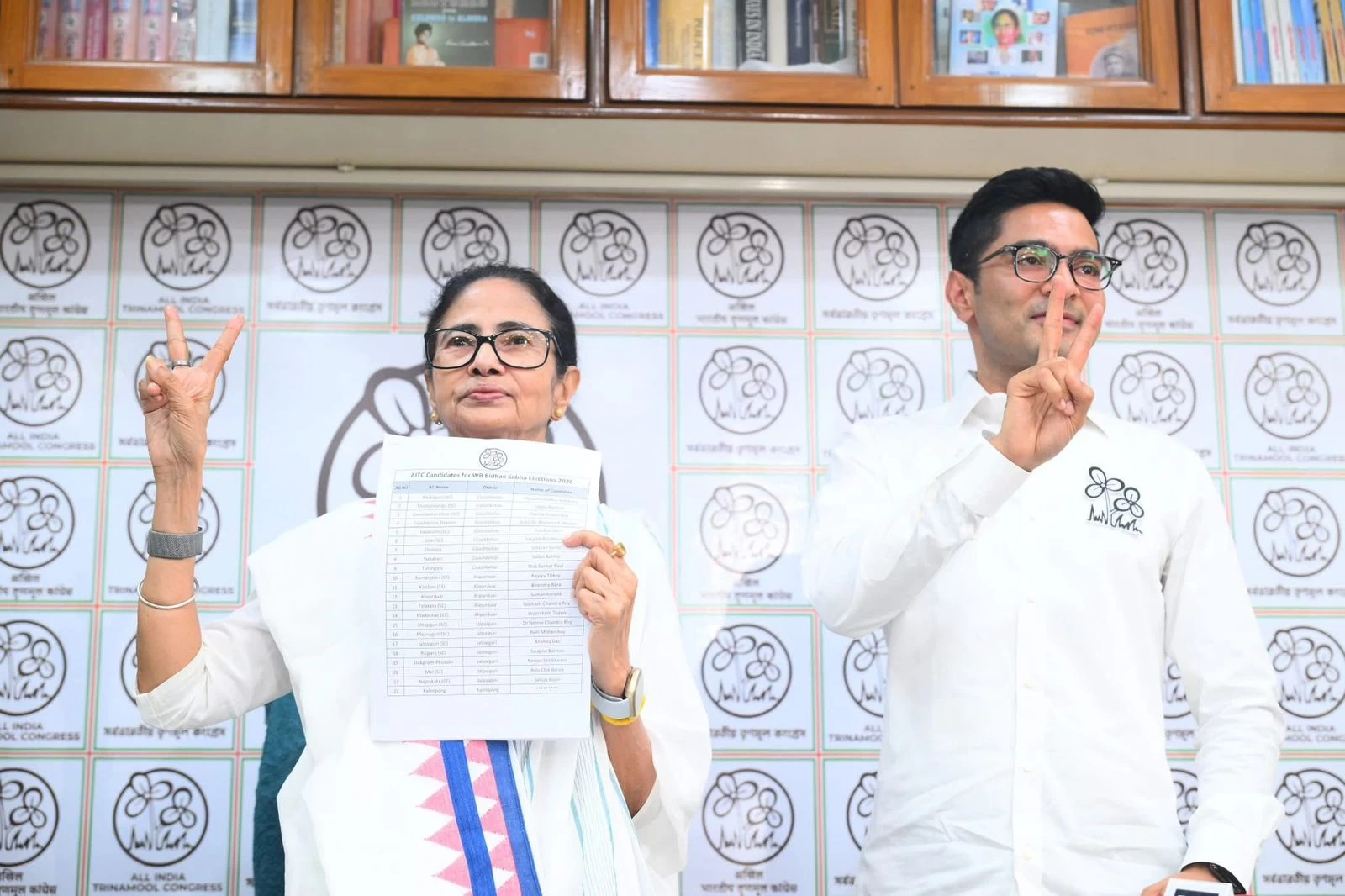
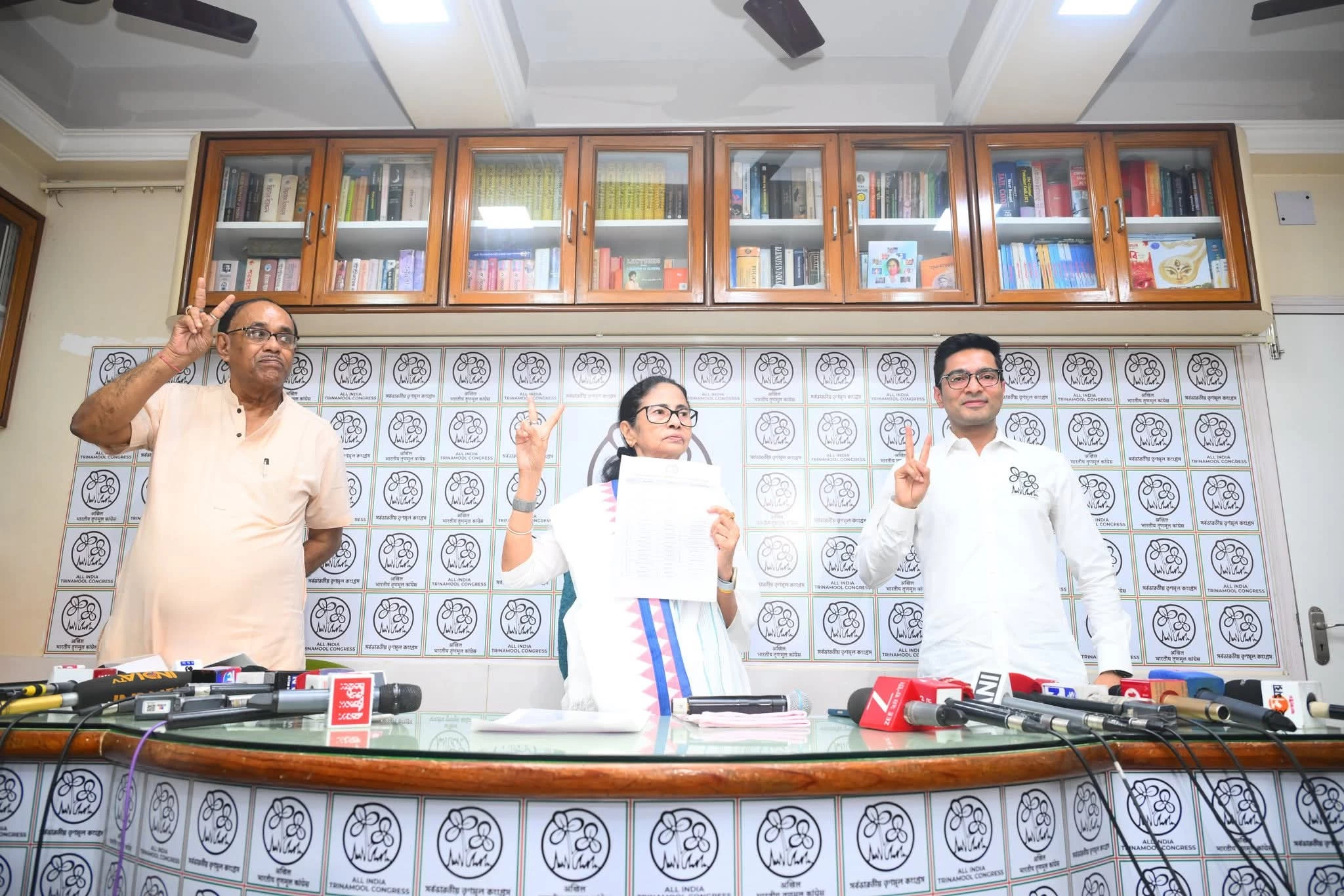
The Trinamool Congress (TMC) has undertaken a significant overhaul of its electoral lineup for the 2026 West Bengal Assembly elections, dropping at least 74 candidates who were fielded in 2021, according to a granular comparison of the two candidate lists. The changes reflect a calibrated strategy by the ruling party, balancing anti-incumbency concerns, organisational reshuffling, and targeted political messaging across regions.
Key leaders dropped
Among the most notable omissions is Tajmul Hossain from Harishchandrapur, a former minister, whose exclusion indicates a clear departure from certain established faces in the Malda belt. Similarly, Partha Chatterjee, once a powerful minister and a central figure in the party’s leadership, has been dropped from Behala Paschim, with the party nominating Ratna Chatterjee instead. He was arrested by Enforcement Directorate and later suspended from the party after being accused in the teacher recruitment scam. In Kolkata, Paresh Paul, a known face from Beleghata in 2021, has also not been renominated, pointing to a selective churn even in urban strongholds.
The list also excludes several other experienced legislators such as Subrata Saha (Sagardighi), Monirul Islam (Farakka), and Kanchak Mallick (Uttarpara) - figures who had either administrative experience or strong local presence.
Regional pattern: North Bengal sees maximum churn
The most striking changes are visible in North Bengal, particularly in Cooch Behar (9 seats), where 6 seats have seen candidate replacement - including Mathabhanga, Sitalkuchi, Sitai, Natabari, and Tufanganj. In Alipurduar (5 seats), at least 4 candidates have been changed, while Jalpaiguri (7 seats) has seen 5 replacements, including Dhupguri, Maynaguri, and Rajganj. Similarly, in the Darjeeling plains (Siliguri belt), 3 out of 4 seats—Siliguri, Matigara-Naxalbari, and Phansidewa - have new faces. This brings the North Bengal tally to well over 60% seat-level churn in key districts, underlining a clear attempt by the party to recalibrate its position in a region where contests have tightened in recent elections. There were no changes made in both Uttar Dinajpur and Dakshin Dimapur districts.
Minority belt adjustments
Another significant trend is visible in the Muslim-dominated districts of Malda and Murshidabad, where the party has made selective but impactful changes. In 2021 election, Murshidabad had voted overwhelmingly in favour of TMC. But the region with over 67 percent Muslim population - has also been the bastion of Congress at one point - the region that has recorded several instances of communal violence which eventually led to the surge of BJP in some of the Hindu dominated constituencies within the district. Leaders like Monirul Islam (Farakka) and Subrata Saha (Sagardighi) have been replaced. In Malda (12 seats), at least 5 constituencies have new candidates, including Maldaha, English Bazar, Harishchandrapur, and Sujapur. In Murshidabad (22 seats), the party has replaced candidates in 10+ constituencies, including Farakka, Sagardighi, Bharatpur, Domkal, and Jalangi. The scale of change here indicates fine-tuning rather than overhaul, aimed at consolidating support in minority-dominated constituencies while addressing local dissatisfaction.
In Nadia (17 seats), at least 8–9 constituencies have new candidates, including Karimpur, Tehatta, Palashipara, Kaliganj, and Santipur. The induction of actor turned politician Soham Chakraborty in Karimpur is among the more high-profile changes, replacing Bimalendu Sinha Roy. This reflects a mix of generational shift and organisational reshaping in a politically sensitive district.
Sincere focus has also been given in North 24 paraganas. In North 24 Parganas (33 seats) - one of the most electorally decisive districts - the party has replaced candidates in at least 12 constituencies. Seats such as Bhatpara, Naihati, Amdanga, and Baranagar have all seen changes. The drops points to a strategic reset in urban-industrial pockets, where contests have been increasingly competitive. Barrackpore has often witnessed violent confrontation between TMC and BJP, ever since former TMC leader Arjun Singh switched over to BJP. Singh’s son is currently the sitting MLA of Bhatpara, the stronghold of BJP.
Industrial belt: Tactical replacements
In the Asansol - Durgapur belt, seats like Raniganj, Kulti, and Durgapur Paschim have all seen candidate changes, indicating renewed focus on industrial constituencies where electoral margins have been volatile. Cricketer Manoj Tiwari has been dropped from Howrah Shibpur after internal disagreements were reported between Tiwari and other senior leaders from the region. Similarly in Hooghly, a new found trade and industrial hub, several changes were made to infuse corrections.
Urban and stronghold stability
While Kolkata largely remains stable, the changes that have been made are politically significant.
The legacy of Subrata Mukherjee in Ballygunge - a seat he represented for decades , till his demise - has now been handed to Sovandeb Chattopadhyay, one of the oldest candidates in the fray, signalling continuity within transition. Babul Supriyo had won the Ballygunj by-election but surprisingly TMC’s vote share in the mixed constituency had dropped. Supriyo was mired in massive controversy following the Asansol riots in 2018 when he was with the sitting BJP MP from there. His alleged inflammatory comments during the 2018 riots had irked the people from the minority community. His induction and subsequent allocation of Ballygunj seat had faced resistance within the party. He has been sent to Rajya Sabha and the legacy of Mukherjee has been now given to another party veteran.
What the changes indicate - Crux
Anti-incumbency management: Dropping 74 candidates suggests an effort to counter voter fatigue and dissatisfaction.
Regional recalibration: Heavy churn in North Bengal indicates a push to regain or strengthen footing in politically sensitive zones.
Social coalition balancing: Adjustments in minority-dominated districts reflect attempts to reinforce core support bases.
Centralised control: Key leadership decisions, including high-profile drops, underline tight control over ticket distribution.